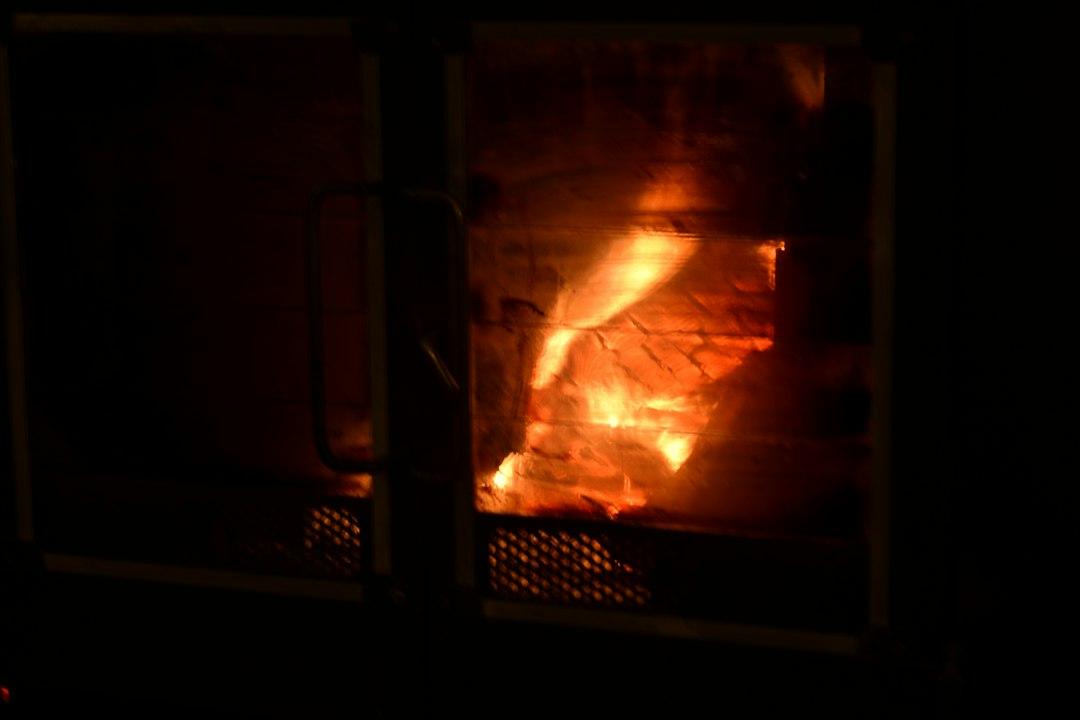
Most stove calls we take in Orange start on the first cold evening of the season. The owner loads the firebox, and something is off: smoke rolls into the room when the door opens, the glass goes black within the hour, or the fire sulks no matter how much kindling goes in. The next question is always money. This post sets out the figures we publish, the things that move a bill where we have no set figure, and how to get a written number for your own stove.
Figures on our list that touch a stove
Booker Chimney Contractors keeps a short public price list. Three of its lines apply to a wood stove directly:
- Visual inspection of the stove, its pipe and the chimney: $170
- Camera inspection of the whole flue, for a sale or after a flue fire: $400
- Sweeping the flue and the pipe that joins it to the stove: from $430
Repairs to the stove body have no line of their own, and that is deliberate. A stove is a steel or cast iron box with a dozen wearing parts, built by makers who all do things a little differently. Any single "stove repair" number would be wrong for nearly every stove it was applied to. We open the stove, find the fault, and write a price for that stove and that fault.
The parts that give out on a hard-working stove
A stove that heats the house most evenings through the winter takes real punishment, and the failures come in a fairly predictable order.
Door and glass seals. The woven seal the door closes against gets crushed a little every time the latch goes down. After a few seasons it stops filling the gap, the stove pulls air around the door, and the fire roars even with the air control shut. The glass has a thinner seal of its own that goes the same way. The cost here is small parts and the right cement, so it sits at the low end of what we do.
Firebrick. The bricks lining the firebox take a knock from every split round dropped in. Hairline cracks are normal and can stay. A brick that has broken away and left bare steel showing cannot, because that steel was never meant to face the flame.
The smoke shelf and burn tubes. Above the fire, out of sight, most stoves built in the last few decades carry a shelf that makes the smoke take a longer path before it leaves. Many also have perforated steel tubes that feed hot air into that smoke so it burns a second time. When the shelf cracks or sags, or a tube burns through, the stove smokes more, eats more wood and puts out less heat.
Catalytic combustors. Some stoves use a ceramic honeycomb in the smoke path to burn the gases at a lower temperature. It wears out and clogs with fly ash. Replacement cost depends entirely on the make.
Cracked castings and warped plates. Cast iron can crack and steel can bow after a few nights of overfiring. Sometimes a part is still made and can be swapped. Sometimes the crack runs through the firebox itself and the honest answer is that the stove is finished.
The connector pipe. That stovepipe linking the stove to the chimney corrodes from within, where acidic condensate collects. Joints loosen and screws back out. This is usually replaced rather than patched.
What decides where your bill lands
Four things do most of the work in setting a stove repair price:
- Whether parts still exist. Popular makes have seals, bricks and tubes readily available. A stove from a maker long out of business may need parts adapted or made, and that costs more than a stock part.
- How much comes apart. A door seal is a short job. A cracked brick behind a shelf that has to come out first takes much longer.
- What the flue is doing. Repairing a stove is wasted money if the chimney above it is the real fault: heavy tar, a cracked tile, or no liner at all. We look up the flue on the same visit, so you hear about both at once.
- Signs of overfiring. Glowing pipe, bowed plates and shattered bricks together tell us the stove has been run too hot. We fix the parts and talk about the burning habit that broke them, or the same repair comes back next winter.
When you want a figure for your own stove, ask for a written repair price here. Give us the name on the plate at the back if you can read it, whether the stove sits on a hearth or inside an old fireplace opening, and what it is doing that it should not.
When repair stops making sense
There is a point where an old stove costs more to keep than to replace, and we say so plainly when we reach it. The usual signs are a crack through the firebox casting, a stove built before the cleaner emission standards that took over in the late 1980s, or a model whose parts nobody makes any more.
Orange sits inside the South Coast Air Quality Management District, and on winter days when the air is poor the district can declare a no-burn day under Rule 445. That covers a wood stove just as it covers an open hearth. For households that heat with wood, an older stove that smokes heavily is a poor bet. Some owners move to a newer, cleaner wood stove; others give up wood for a gas insert, which runs $2,850 to $5,750 set into the existing opening with its vent. We compare the two in Wood Insert or Gas Insert?.
What happens on the repair visit
We put down covers, open the stove, and check every seal, brick, tube and hinge. We work the air control and the door latch. Then we look up the connector pipe and into the flue. You get a written report with each fault on its own line, a photo of it and a price beside it. Nothing is touched until you approve a line, and you can approve some and leave others for later.
If the flue needs attention before the stove is safe to light, the report says that first. A stove is only as safe as the chimney it feeds. Our wood stove repair page lists what we work on, and the chimney sweep page covers the flue side.
Before you call
A few things help us arrive with the right parts:
- The make and model, or the shape of the stove and where the door hinges if the plate is gone
- Whether it burns wood only or was built as a multi-fuel stove
- How often it runs, and what wood goes in it
- When the flue was last swept, if you know
None of this is required. If all you know is that the stove smokes, that is enough to start.
Cold nights in Orange are few enough that a stove you cannot trust is a stove you stop lighting. Tell us about it through our contact page and we will set up a visit to look it over.
Want This Looked At on Your Own Stove?
Booker Chimney Contractors repairs wood and pellet stoves and sweeps flues out of Orange. The contact page takes the appliance and its trouble, and we call back with a visit and a price where one is listed.