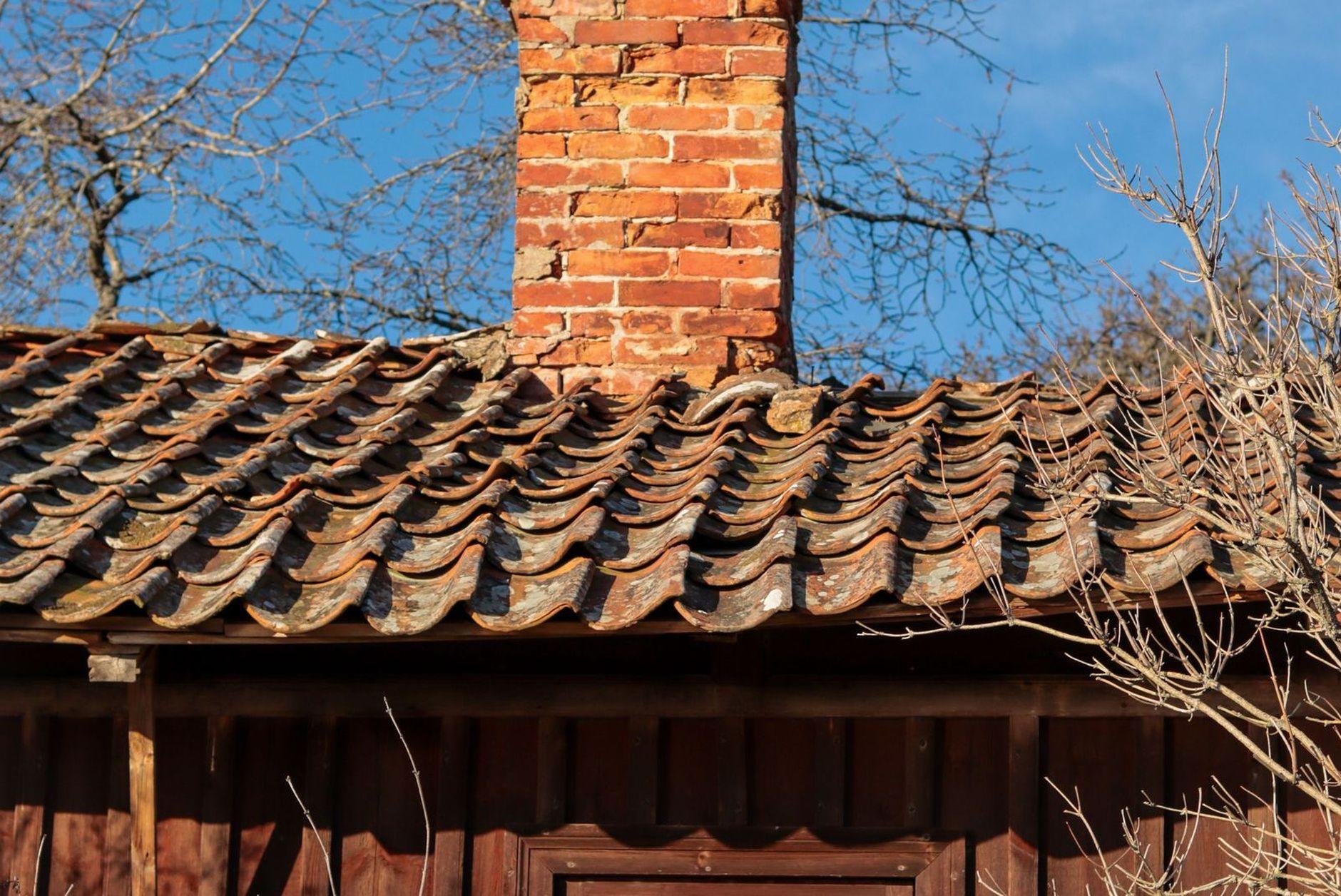
The listing photo shows a cast iron stove on a brick hearth with a basket of split oak beside it, and it looks like the room everyone will gather in. It may well be. But a wood stove in a house you are about to buy is the one appliance whose history nobody will write down for you, and the parts that matter most sit out of sight in the flue. This post covers what to watch for when the house in Orange you are buying burns wood or pellets, and the inspection that answers the questions before the money moves.
Stoves are often added later
Most houses in and around Orange were built with an open fireplace or none at all. A wood stove is usually something a later owner added, and the quality of that work varies enormously. Some were fitted by people who knew the clearances and the liner sizes. Others were set on the hearth, pushed into the opening and connected to whatever flue was there.
The common problems we find on stoves added later:
- A stove inside a fireplace opening venting straight into the big masonry flue, with no liner to the top
- Too little space between the stove body or its pipe and the wall, mantel or ceiling
- A hearth pad that is too small, or no protection on the floor in front of the door
- Single-wall pipe passing through a wall or ceiling where only a rated chimney section should go
- A pellet vent ending just outside a window or under the eaves
None of these show up on a listing, and a few can only be confirmed with a tape measure and a camera.
What the general home inspection does and does not cover
Your home inspector will look at the stove and the parts of the chimney visible from the room and the roof, and will usually note anything that looks wrong. What a general inspection is not built to do is look inside the full height of the flue, or check a stove installation against the clearances on its label. When the inspector's report says something like "recommend evaluation by a chimney professional", that is the hand-off to us.
The inspection a purchase calls for
Chimney work in the United States follows NFPA 211, and that standard sets out three inspection levels. Level 2 is the one it links to a home changing hands. On top of everything a visual check covers, it sends a camera through the whole flue and takes in the reachable attic and roof spaces around the chimney.
For a house with a stove, that camera run is where the answers are. It shows whether a liner runs to the top or the stove dumps smoke into old tile, whether the tile joints are intact, and whether there is hardened tar or the cracking that follows a chimney fire. A seller cannot tell you any of that from memory.
On our list, a Level 2 inspection is $400 for a single flue. Two flues, say one for the stove and one for the fireplace, mean two camera runs, each priced on its own. More on how a sale inspection fits into the buyer's timeline is on our home sale inspection page.
Reading the report as a buyer
Our reports sort each finding into three groups: safety problems that should be fixed before the stove is lit, wear that will need money within a few seasons, and things that are fine. Each one comes with a photo and a plain sentence about what it means for someone who plans to burn wood in that house.
That sorting is what turns a report into a negotiating position. A missing liner under a stove is a safety item and a fair repair request. A crown that will need sealing in a few years is something to budget for. A worn door seal is a small item to fix after closing.
When a fix carries a listed price here, for instance from $430 for a sweep, we print it next to the finding. Where it does not, as with a liner, we can price it in writing so the repair request carries a real number. A cap is quoted after we measure the flue. If you are at that point, book the Level 2 through the form here with the address, the type of stove, and the names of the agents handling access.
Who gets the report
The person who pays for the inspection decides who receives it. Most buyers want it sent to themselves and their agent; some add the lender. If the seller's side wants a copy to act on a repair request, the buyer can share it or ask us to. We send it to whoever is named at booking, and we do not send it anywhere else.
Pellet stoves in a purchase
Pellet stoves get a slightly different look. We check the vent from the stove to its outside end, the ash in the bends, where the vent ends relative to windows, doors and the eaves, and the condition of the stove itself. A pellet stove that has been sitting unused for a season or two often needs a full clean and a new igniter before it runs reliably, which is worth knowing before you count on it for heat. Our pellet stove repair page covers that work.
Things to ask the seller
The camera answers most questions, but a few are worth putting to the seller in writing during the purchase:
- When was the stove installed, and by whom?
- Was a permit pulled for the installation?
- When was the flue last swept?
- Has there ever been a chimney fire, even a small one?
- Is there a manual or a label for the stove?
The answers will not replace the inspection, but they help us know where to look.
After you close
If the report comes back clean, the stove still needs a sweep before the first winter of heavy use, and then each season after. If it came back with repairs that the seller did not take on, our up-to-code repair page lists the common fixes with our prices where we have them.
A working stove is a real asset in a house in Orange, as long as the flue behind it is sound. Get the camera on it before you commit: send the address and who should see the report through our contact page.
Want This Looked At on Your Own Stove?
Booker Chimney Contractors repairs wood and pellet stoves and sweeps flues out of Orange. The contact page takes the appliance and its trouble, and we call back with a visit and a price where one is listed.