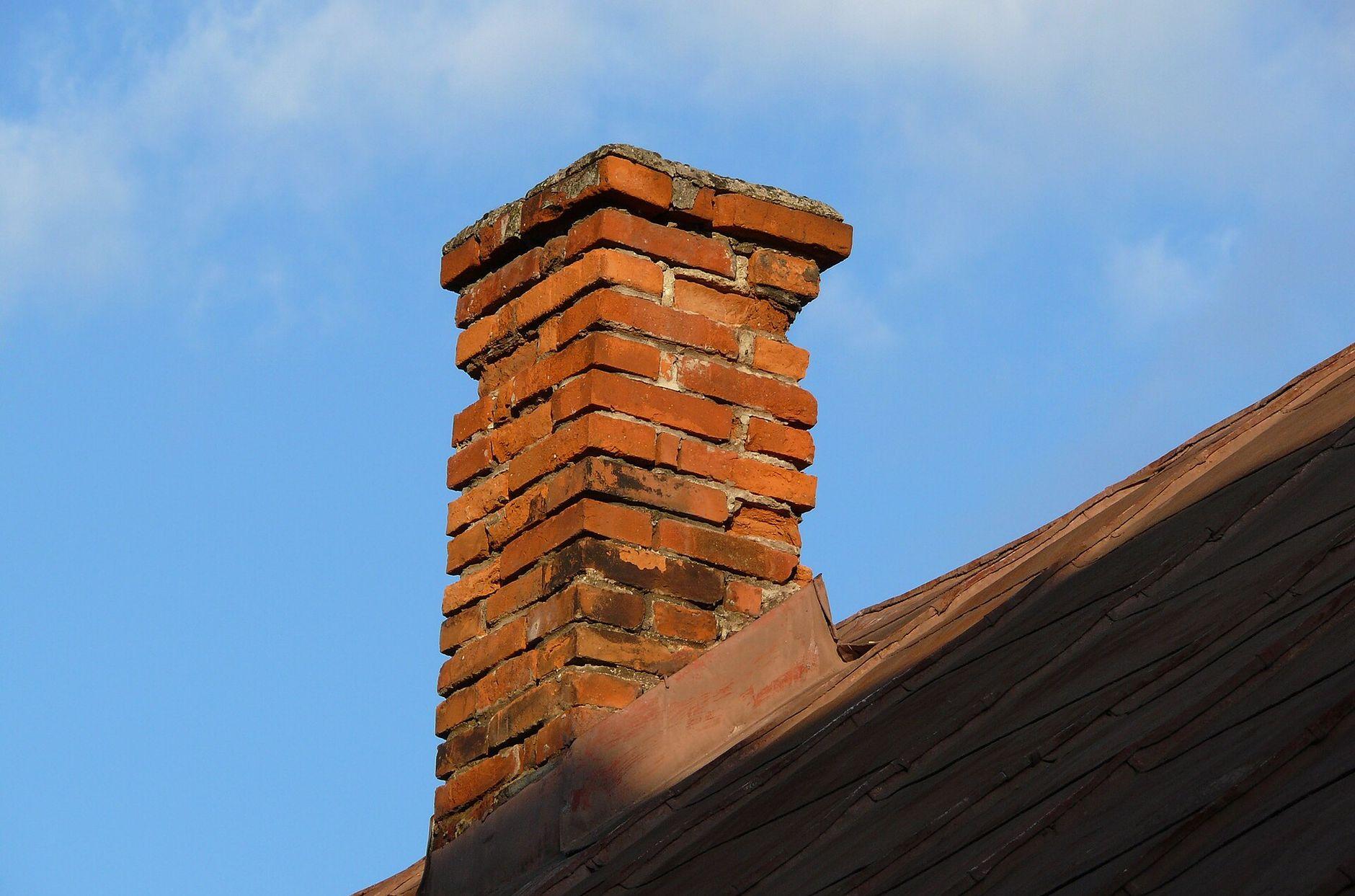
Almost every failed inspection we write on a stove house in Orange has the same line near the top: the stove vents into a masonry flue with no liner of its own. It is the most common reason a woodburner fails, and it is the repair owners ask about most, mainly to ask what it will cost. The short answer is that it depends on the chimney. The longer answer is below, along with what you get on paper before any work starts.
Why a stove needs a liner at all
An old fireplace flue was sized for an open fire, which pushes a lot of air and smoke up a wide, square passage. A stove or insert pushes much less, through a round outlet perhaps six or eight inches across. Feed that small stream of smoke into a flue three or four times larger and it slows down, cools off and drops its tar on the cold tile walls. The draft is weak, the glass blackens, and the deposits build quickly.
A steel liner sized to the stove outlet fixes that. It keeps the smoke moving, keeps it hot, and gives the sweep a clean round tube to brush instead of a rough masonry box. It also stands between the fire and any cracked tile or open joint that the old flue has picked up over the decades.
Liners we fit for woodburners
For wood stoves and wood inserts we fit stainless steel liners rated for solid fuel:
- Flexible stainless. Comes on a roll, bends around offsets in the chimney. Suits most chimneys with a dog-leg or a narrow spot.
- Rigid stainless. Straight sections joined together. Suits straight chimneys, and gives the smoothest inside surface.
- Insulated systems. Some installations need insulation around the liner to meet clearance rules or to keep the smoke warm in a cold, tall chimney.
At the bottom, the liner joins the stove outlet or the insert collar. At the top, a plate closes the old flue around it and a cap with spark mesh finishes it off.
What makes one liner job cost more than another
We do not publish a liner price, because chimneys that match from the yard rarely match inside. These are the factors that set the figure we write for you:
- Height. Liner is sold by the foot, and a two-storey chimney needs a lot more than a single-storey ranch house.
- Diameter. The stove maker sets the outlet size. Larger liner costs more and may not fit down some flues without work.
- Offsets. A chimney that jogs sideways partway up needs flexible liner and more time to feed it.
- Tight spots. If the old tile is too small to take the liner, it has to be broken out. That is one of the bigger swings in price.
- Insulation. Where clearances or a cold flue call for it, insulation adds material and labour.
- The top of the chimney. A crown that is cracked or loose has to be sound before the top plate can seal to it.
- Roof access. A steep or high roof takes more setup.
Once we have measured, we write the price on a quote with each of those parts on its own line. If you want that number for your chimney, request a written liner quote here. Tell us what the stove or insert is, roughly how tall the chimney is, and whether the house is one storey or two.
Prices we do publish around a liner job
A few items that often sit beside a liner job do have figures on our list:
- A camera inspection of the flue, to see what the liner has to pass: $400
- A sweep, to clear the old tar before anything goes in: from $430
A cap with spark screen, where the old one is missing or rusted, is quoted after we measure.
If the stove is being swapped for a gas unit at the same time, the gas insert with its vent is $2,850 to $5,750 installed. Gas inserts need their own vent run up the chimney, but it is a different system from a wood liner.
When a liner is not the right fix
Sometimes the chimney itself is the problem. If the brick above the roof is loose, the crown is breaking up, or the chimney has shifted in a quake, a liner on its own does not make it sound. In those cases the quote will separate the liner from the masonry work, and the masonry comes first. Our chimney repair and seismic retrofit pages describe that side.
It also works the other way. A chimney with sound, unbroken tile that serves an open fireplace does not need a liner just for the sake of it. The liner earns its keep when a closed stove or insert is connected, or when the old flue has cracked.
How the job runs
We start with the camera, because it tells us what the liner has to pass through. Then we sweep the flue, clear any old tar, and break out any tight spots if the quote includes them. The liner goes in from the top, the bottom joins the stove or insert, and the top is sealed and capped. We run the camera again afterwards so you have footage of the finished flue. That footage is useful if the house is sold or an insurer asks.
The whole process is listed on our chimney liner installation page, and the most common code repairs, liners included, are set out on our up-to-code repair page.
A stove without a proper flue is the job we would most like to fix before the next winter in Orange. Tell us what you burn and what the chimney looks like through our contact page, and we will set up the measure.
Want This Looked At on Your Own Stove?
Booker Chimney Contractors repairs wood and pellet stoves and sweeps flues out of Orange. The contact page takes the appliance and its trouble, and we call back with a visit and a price where one is listed.